Book Your Kidney Care Consultation
Get expert guidance for your kidney health. Schedule a consultation with Dr. Jyotikanta, Consultant Nephrologist & Kidney Transplant Physician.
- Kidney Disease
- CKD Management
- AKI Treatment
- Kidney Failure
- Kidney Transplant
- Dialysis Care
- Diabetic Kidney Disease
- Hypertensive Kidney Disease
- Polycystic Kidney Disease
- Kidney Cyst
- Glomerulonephritis
- Nephrotic Syndrome
Send Us Your Enquiry
Fill in your details and our expert will contact you shortly.
Specialized Glomerulonephritis Treatment
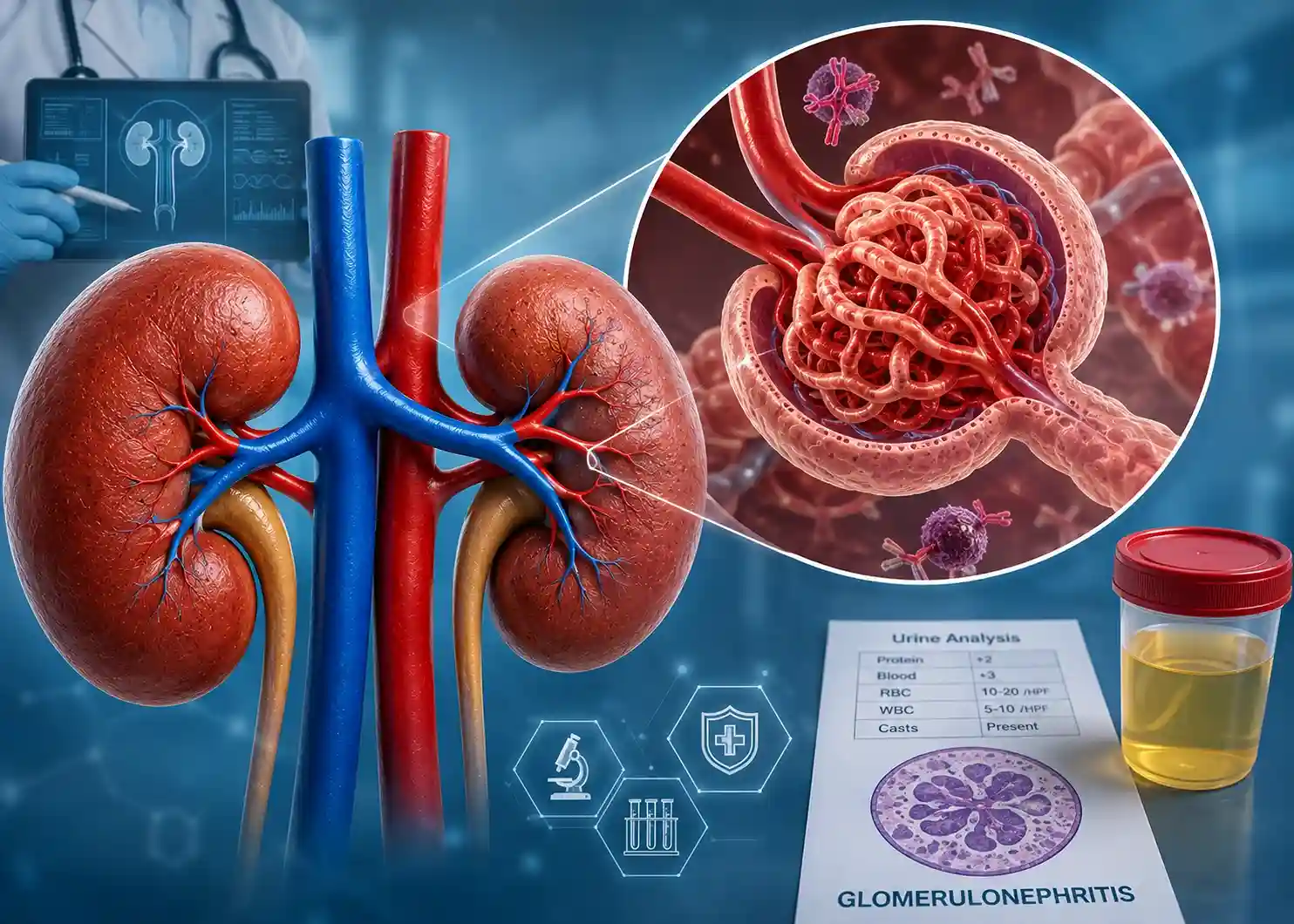
What Is Glomerulonephritis?
Glomerulonephritis affects the kidney's filtering system and can develop due to different causes, including infections, autoimmune conditions, diabetes, and certain other health problems. Some people may have few symptoms in the beginning, while others may notice swelling, changes in urine, high blood pressure, or reduced kidney function.
Who May Need Glomerulonephritis Evaluation?
People with blood or protein in their urine, swelling, high blood pressure, or unexplained changes in kidney function may need further evaluation.
Glomerulonephritis Treatment in Bhubaneswar can review the patient's symptoms, urine and blood reports, medical history, and other findings to understand the possible cause of kidney inflammation.
Evaluation may be considered for patients with:
-
Blood in the urine
-
Protein in the urine
-
Swelling around the eyes, feet, or legs
-
Increased serum creatinine
-
Reduced eGFR
-
Unexplained changes in kidney function
-
A history of autoimmune disease or certain infections
Glomerulonephritis Evaluation in Bhubaneswar
The evaluation depends on the patient's symptoms and the suspected cause. Blood and urine tests are commonly used to check kidney function and look for protein or blood in the urine. Imaging or a kidney biopsy may be advised in selected cases to understand the type and cause of kidney damage.
-
Urine Analysis
A urine test can identify blood, protein, and other changes that may indicate damage to the kidney's filtering units.
-
Kidney Function Tests
Blood tests such as serum creatinine and eGFR help assess how well the kidneys are filtering waste from the blood.
-
Blood Pressure Check
High blood pressure may occur with glomerular disease and can also put additional stress on the kidneys. Blood pressure is therefore an important part of the assessment.
-
Kidney Biopsy
A kidney biopsy may be recommended when more information is needed about the type or cause of kidney damage. A small sample of kidney tissue is examined to help guide diagnosis and treatment.
-
Additional Tests
epending on the patient's condition, doctors may recommend blood tests for autoimmune conditions, infections, or other possible causes of glomerulonephritis.
Glomerulonephritis Treatment in Bhubaneswar
Treatment depends on what is causing the kidney inflammation and how much the kidneys have been affected. Depending on the condition, treatment may involve medicines to control blood pressure and protein loss, reduce swelling, or address an underlying immune-related problem.

Some forms of glomerulonephritis can gradually affect kidney function. Regular testing can help track changes in creatinine, eGFR, urine protein, and blood pressure. Early assessment and appropriate treatment may help manage the condition and reduce the risk of further kidney problems.
High blood pressure often needs ongoing attention rather than a one-time treatment. Follow-up visits can include BP checks, kidney function tests, urine testing, and a review of medicines and daily habits. The treatment plan can be changed when the patient's reports or health condition change.
What are the symptoms of glomerulonephritis?
Symptoms may include blood or protein in the urine, swelling around the eyes or legs, high blood pressure, and changes in kidney function. Some patients may have few symptoms initially.
How is glomerulonephritis diagnosed?
Diagnosis may involve urine tests, blood tests, kidney function testing, imaging, and in some cases a kidney biopsy to identify the cause and type of kidney damage.
Can glomerulonephritis cause kidney failure?
Some types of glomerulonephritis can progress and cause severe kidney damage or kidney failure. The risk depends on the underlying cause and the extent of kidney injury.
When should I see a kidney specialist?
Consultation may be appropriate if you have persistent protein or blood in the urine, swelling, high blood pressure, or abnormal kidney function test results.